
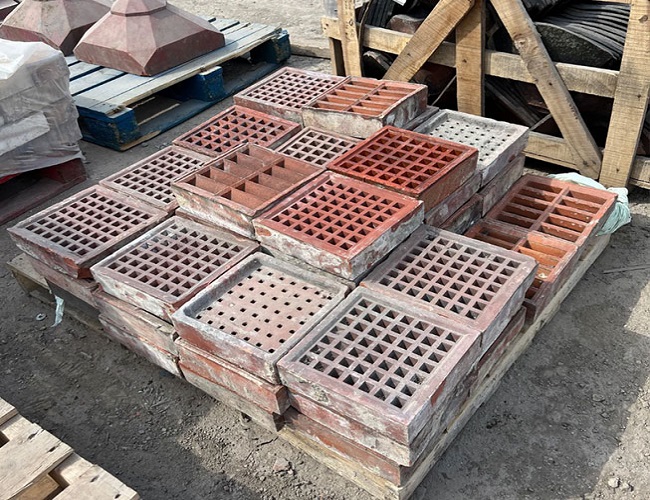
We get calls all the time from people who are about to knock something down. An old garage at the back of a Preston property. A crumbling brick fence in Essendon. A double-storey terrace in Carlton that’s been earmarked for a complete rebuild. The conversation usually starts the same way — “we’re demolishing next week, do you buy bricks?”
And every single time, our first question back is: have you actually looked at what you’ve got?
Because here’s the thing most people don’t realise until it’s too late. The moment a demolition crew swings a machine at an old brick wall, the value of what’s inside that wall drops dramatically. Bricks crack. Mortar splinters. Materials that were worth something an hour ago become rubble. The difference between salvaging genuine value from an old structure and ending up with a skip bin full of broken pieces comes down almost entirely to what happens before the machinery arrives.
This guide is for anyone staring down a demolition project and wondering whether there’s more to be saved than they’ve been told.
Why Old Structures Hold More Value Than Most People Think
Melbourne’s older suburbs — Fitzroy, Collingwood, Richmond, Brunswick, Coburg — are full of structures built between the 1880s and the 1950s. The bricks in those buildings were made differently to what gets manufactured today. Slower firing. Denser clay. Hand-pressed in many cases. The result is a brick that has a weight, a texture, and a warmth that simply doesn’t come off a modern production line.
We’ve handled stock from demolished homes that are 130 years old. Those bricks are still structurally excellent. Still beautiful. And because they can never be remade — that era of manufacturing is gone — they carry genuine scarcity value. Architects specify them by name. Designers chase them for feature walls. Landscapers use them for garden edging and paving because nothing new comes close to the look.
Before you demolish, you need to understand what era your structure is from and what it’s made of. That single piece of information changes the entire conversation about what the teardown is worth.
The Salvage Assessment: Do This Before You Call the Demolisher
Most demolition companies are in the business of clearing sites efficiently. That’s their job. They are not, by default, in the business of carefully extracting maximum value from your materials — unless you ask them to be, and unless you’ve done the groundwork first.
Before any demolition quote is finalised, walk the structure yourself or bring someone who knows what they’re looking at. Here’s what to assess:
Brick condition and quantity. Are the bricks intact? Is the mortar soft enough that bricks can be cleaned without breaking? Lime mortar — common in pre-1950s Melbourne construction — is far easier to remove cleanly than modern cement mortar. Soft mortar means higher salvage yield. Hard cement mortar means more breakage and lower recovery rates.
Brick type. Handmade, wire-cut, pressed — these distinctions matter enormously to buyers. Handmade bricks with their characteristic texture variations and slight irregularities are the most sought-after. Uniform machine-pressed bricks are more common and priced accordingly.
Pavers and flooring. Old brick paving — particularly the thick, heavy pavers used in Victorian-era courtyards, laneways, and factory floors — is extraordinarily difficult to find in good condition. If your structure has original brick flooring or external paving, do not let it get smashed up in a general demolition. Those pieces have serious value as recycled paving bricks for landscaping, courtyard restoration, and heritage streetscape projects where matching old-style pavers is otherwise nearly impossible.
Timber, stone, and metalwork. Hardwood beams, bluestone lintels, cast iron brackets — old structures often contain a mix of salvageable materials beyond just bricks. A proper salvage assessment looks at all of it.
How to Actually Salvage, Not Just Talk About It
There’s a difference between wanting to salvage materials and actually doing it properly. We’ve seen plenty of jobs where the intention was there but the execution fell apart because nobody planned the sequence correctly.
Selective demolition needs to happen before mechanical demolition. This means hand-stripping bricks, roof tiles, timber, and anything else of value before any machinery goes near the structure. It takes more time. It costs more in labour upfront. But it’s the only way to recover materials in usable condition — and the value recovered almost always outweighs the extra cost.
Brief your demolition contractor explicitly. Put it in writing. Specify which sections of the structure contain materials you want salvaged, how you want them handled, and where they’re to be stacked on site. Demolition crews are efficient — if they’re not told otherwise, they’ll take the fastest path through the job, and materials will be collateral damage.
Have a buyer lined up before demolition starts. Nothing kills a salvage operation faster than having a stack of cleaned bricks sitting on site with nowhere to go. Storage costs money. Weather damages cleaned bricks over time. Movement and rehandling breaks more of them. If you’ve assessed your stock and know what you have, reach out to suppliers and buyers — including us — before the work begins.
The Financial Case Is Clearer Than You’d Expect
Let’s put some rough numbers around this, because the financial argument for proper salvage is genuinely compelling and people often underestimate it.
A good-quality reclaimed heritage brick in Melbourne sells at prices that would surprise most people who assumed they were getting rid of rubble. Handmade ironstone or Flemish bond bricks from demolished period homes are among the most in-demand products we stock. Matching sets — where multiple thousands of bricks from the same demolished structure are available in consistent colour and texture — carry a real premium.
Old paving bricks are even harder to source in bulk. The thick clay pavers used in Victorian-era Melbourne construction were made to carry vehicle and foot traffic indefinitely. We get enquiries for these constantly from landscapers, architects, and council restoration projects. When they come up in a demolition, they’re worth serious money — if they’re recovered properly.
For refurbished bricks in Melbourne that buyers are actively seeking, the supply never keeps up with demand. Melbourne is a city that loves its heritage aesthetic, and there simply aren’t enough period buildings being demolished to satisfy the market for genuinely old, genuinely local brick. That scarcity puts you in a strong position if you’re sitting on a demolition project with quality masonry inside it.
What Happens When You Don’t Salvage
We’ve seen it enough times to tell you plainly. A demolition crew arrives Monday morning. By Thursday, a century-old double-brick home is rubble. The skip bins are full. The landfill levy has been paid. And the homeowner, who got a cheaper demolition quote because “we’ll just clear the lot,” is now looking at a bare block and wondering why they feel vaguely like they left money on the table.
Because they did.
The bricks that could have been sold. The pavers that a landscaper three suburbs away was desperately searching for. The handmade feature bricks that an architect had been trying to source for six months. Gone. Not because they had no value — because nobody stopped to ask the question before it was too late.
Talk to Us Before You Demolish
We work with homeowners, developers, and demolition contractors across Victoria. If you’ve got a structure coming down, we’re genuinely happy to take a look at what you have and give you an honest assessment of what’s worth recovering and what isn’t. No obligation. No runaround.
Melbourne’s old buildings have given us the best stock we carry. Treat a demolition project right, and it gives something back to you too.
Get in touch with the Bricks Victoria team before your next demolition project at bricksvictoria.com.au